
The Quick Answer
Use a silicone-based or white lithium garage door lubricant on the rollers, hinges, springs, and the track rollers glide on. Apply it sparingly, wipe off the excess, and do it twice a year. Skip WD-40, motor oil, and regular grease — they either evaporate too fast or collect dust and grit, which is worse than not lubricating at all.
Why This Matters More Here Than in Drier Climates
Garage doors in Tuscaloosa and the surrounding West Alabama area deal with a specific combination: heavy humidity most of the year, afternoon downpours that blow moisture into the garage, and swings between hot, swollen summer air and drier fall conditions. That moisture cycle is exactly what causes hinges and rollers to rust from the inside out, and it's why generic household oils don't hold up — they thin out in the heat and wash away or gum up with condensation. A proper lubricant resists moisture instead of reacting to it.
Tools You'll Need
- Silicone spray or white lithium grease lubricant (garage-door specific, not household oil)
- Clean microfiber cloth or rag
- Step ladder
- Soft-bristle brush or old toothbrush (for cleaning tracks before lubricating)
- Work gloves
- Flashlight
Step-by-Step: Lubricating Your Garage Door
- Disconnect the opener and close the door manually, or run the door through a full cycle first so you can watch and listen for which parts are squeaking, grinding, or sticking.
- Wipe down the tracks with a dry cloth to remove dust, pollen, and grime. Do not lubricate the tracks themselves — rollers should glide on clean metal, not slick metal.
- Spray the hinges where the door panels fold, working the lubricant into the pivot point rather than coating the whole hinge.
- Lubricate the rollers, focusing on the bearings at the center, not the wheel surface that touches the track.
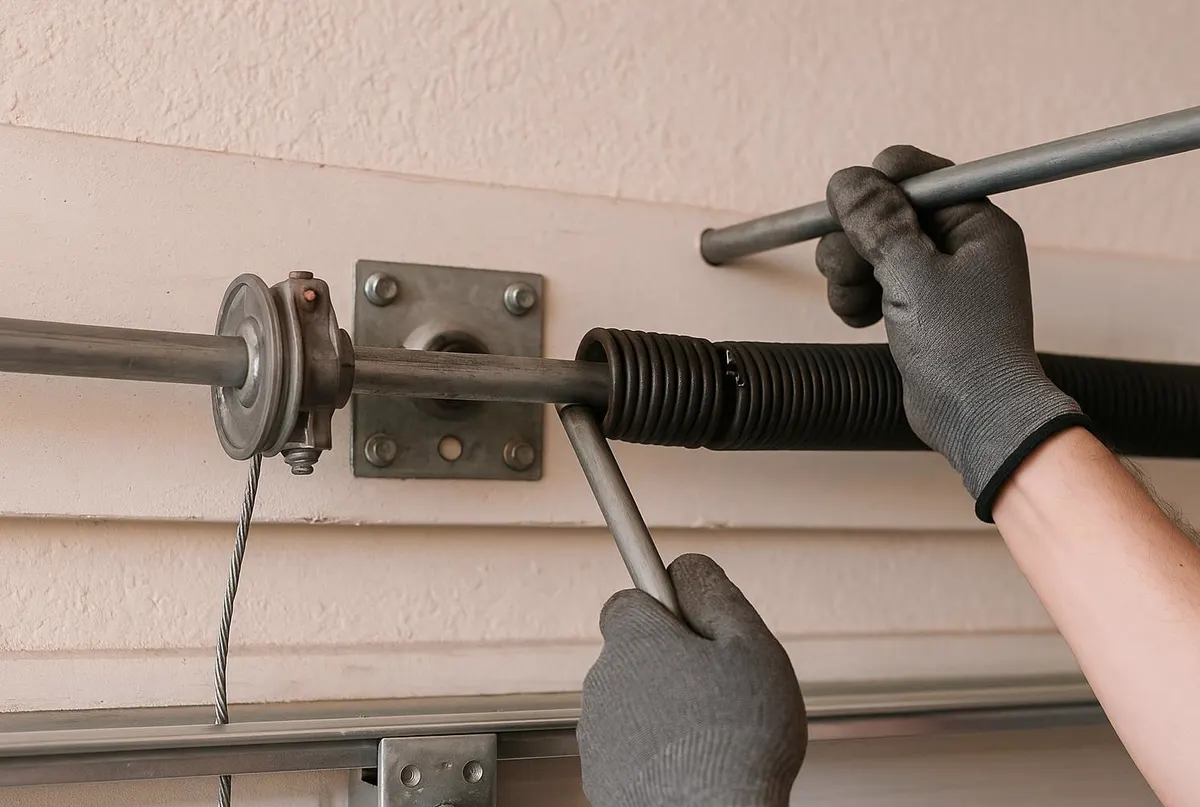
- Coat the springs lightly — torsion springs along the top of the door, or extension springs along the upper tracks. A thin film is enough; dripping lubricant will just attract dust.
- Apply lubricant to the lock mechanism and the armbar that connects the door to the opener.
- Run the door up and down two or three times to work the lubricant into every moving part, then wipe off any excess that drips onto the floor or tracks.
- Reconnect the opener and test normal operation, listening for any remaining noise.
What NOT to Use
- WD-40 is a solvent and moisture-displacer, not a lubricant. It breaks down fast in heat and leaves parts drier than before within a few weeks.
- Standard grease or petroleum jelly is too thick. It collects dust, pollen, and grit, which turns into a grinding paste on rollers and hinges.
- Motor oil drips, stains driveways, and attracts debris the same way grease does.
- Anything on the tracks — lubricating the tracks instead of the rollers causes the door to slip or jump.
What's Safe for Homeowners vs. What Needs a Technician
Spraying hinges, rollers, springs, and the lock mechanism is a reasonable DIY task for most homeowners — it takes fifteen minutes and basic tools. Where the line gets drawn is anything involving spring tension, cable adjustment, or opener gear mechanisms. Torsion springs are under heavy load and can cause serious injury if handled incorrectly, and adjusting cables or the opener's internal gears requires calibration tools most homeowners don't have. If lubrication doesn't fix a grinding noise, a door that's off-track, or a spring that looks stretched, worn, or gapped, that's a sign something mechanical needs attention rather than more oil.
When to Call Tuscaloosa Garage Door Works
If you've lubricated everything and the door still grinds, sags on one side, or the opener strains to lift it, that usually points to a worn roller, a weakening spring, or a track that's shifted out of alignment — not something lubricant will solve. We handle garage door maintenance visits where we inspect springs, cables, and hardware for wear before they fail, and we handle spring replacement when a spring is too far gone to service safely. Given how much Tuscaloosa's humidity and storm season accelerate rust and swelling, a yearly maintenance check catches problems while they're still small.
If your garage door needs more than a fresh coat of lubricant, call Tuscaloosa Garage Door Works. We serve Tuscaloosa, Northport, Cottondale, Coker, Brookwood, Lake View, Moundville, and Fosters, and we show up when we say we will.